







-150x150.png)

How a Heated Mug Warmer and a Mining Device Can Coexist on Your Desk

Modern desktops are no longer just about laptops and monitors.
They have quietly evolved into long-running workstations — places where devices stay powered on for hours, sometimes all day.
Desk lamps, speakers, routers, charging docks…
All of them share one thing in common: they are designed for continuous, stable operation.
This shift raises an interesting question:
Can everyday desktop devices do more than just one thing — without becoming complicated or unsafe?
The Problem with Traditional Mug Warmers
Heated mug warmers are not new.
But most traditional models are built with short-term use in mind:
Simple heating plates
No real thermal management
Limited protection for long operating hours
They work — until they don’t.
For users who spend long hours at a desk, constantly reheating drinks or turning devices on and off becomes an unnecessary interruption.
What people actually need is not “more heat”, but controlled, stable warmth over time.
When Constant Temperature Meets Long-Term Power-On Design
A smart thermostatic mug warmer changes the logic entirely.
Instead of repeatedly heating and cooling, it maintains beverages within a controlled temperature range.
This requires:
Continuous power input
Reliable thermal control
Safe heat dissipation
Stable internal components
Once a device is designed to meet these conditions, something interesting happens:
It begins to resemble other long-running computing hardware.
Not because it needs to compute — but because it can.
Why Combining a Mug Warmer with Computing Is Technically Reasonable
At first glance, combining a heated mug warmer with a mining function may sound unusual.
In reality, the two share several foundational requirements:
Designed for long-term operation
Stable power delivery
Predictable thermal behavior
Continuous system monitoring
When these conditions already exist for safe temperature control, adding an auxiliary computing function becomes a technical extension — not a contradiction.
The key point is intention.
In this design philosophy:
The primary function remains beverage temperature control
Computing is optional and secondary
No performance trade-offs are made for heating safety
WM02: A Practical Example of Multi-Function Desk Hardware
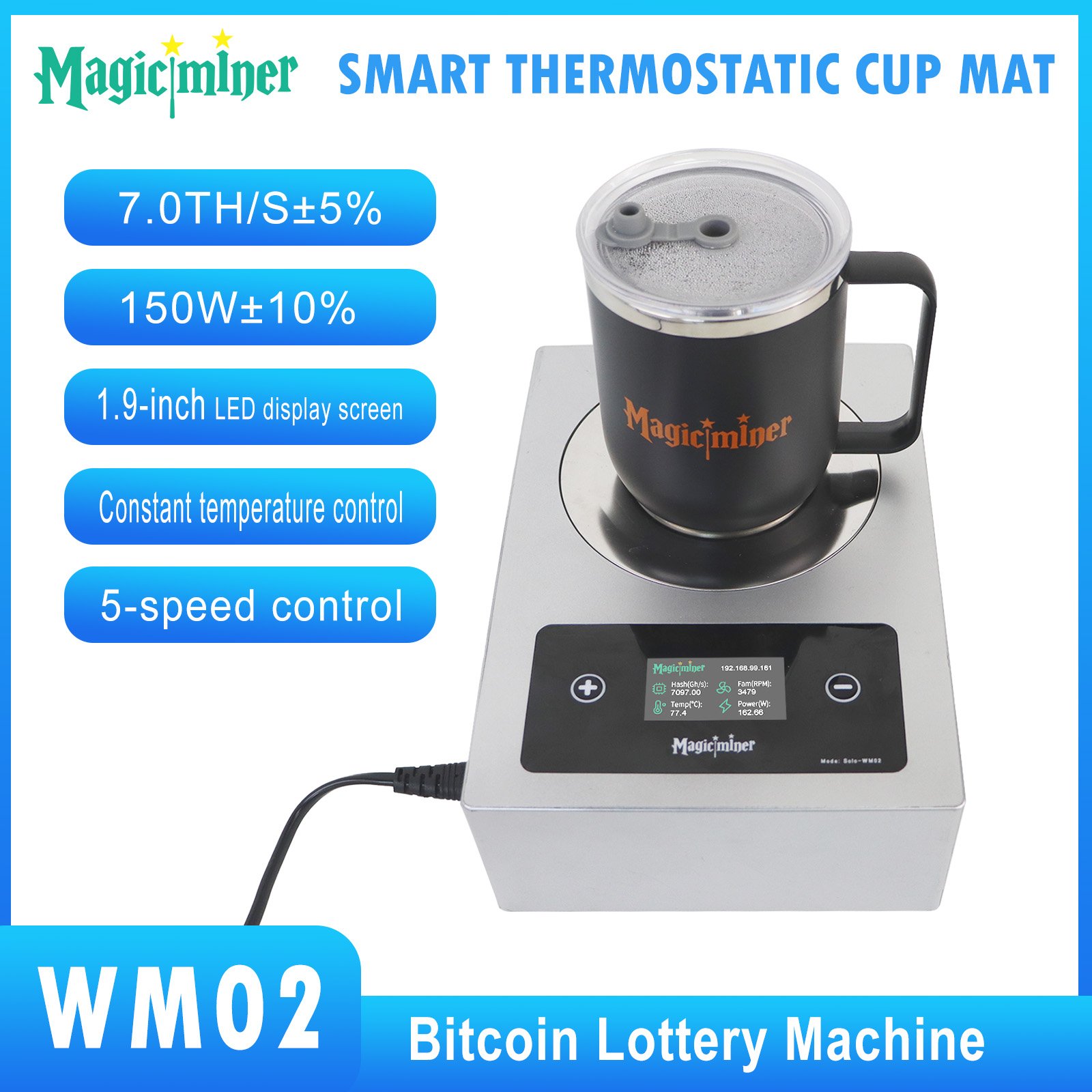
The WM02 Smart Thermostatic Mug Warmer was developed based on this exact logic.
It is first and foremost:
A constant-temperature mug warmer
Designed for home and office desktops
Built for long-term, stable power-on use
On top of that, it offers:
An auxiliary SHA-256 computing function
User-configured operation
Transparent, real-time status display
Importantly, the computing feature is not automatic, not mandatory, and not presented as an investment tool.
It exists simply because the hardware architecture already supports continuous, stable operation.
What This Design Is — and Is Not
To avoid misunderstandings, it’s important to be clear.
This design is:
A smarter way to use always-on desktop hardware
A combination of daily utility and optional technical capability
Built around safety, stability, and transparency
This design is not:
A promise of mining returns
A replacement for professional mining equipment
A device built around speculation
The auxiliary computing function does not change the nature of the product — it simply expands what the device can do, not what it claims to deliver.
The Bigger Trend: Functional Devices with Honest Capabilities
As desktop environments evolve, users are becoming more conscious of:
Energy usage
Device uptime
Practical value per square inch of desk space
Products like WM02 represent a broader trend:
functional devices that quietly do their job — and, when appropriate, do a little more.
Not louder.
Not faster.
Just smarter.
Final Thoughts
The combination of a heated mug warmer and a computing function is not about novelty.
It’s about recognizing how modern desks actually work.
When a device is already designed to stay on safely, stably, and continuously,
the question is no longer “why combine these functions?”
It becomes:
Why waste stable runtime if it can be used responsibly?