
Home Miner vs Solo Miner: What’s the Difference and Which One Should You Choose?
If you’re planning to mine Bitcoin at home, you’ve probably come across two terms repeatedly: Home Miner and Solo Miner.
Many beginners assume they mean the same thing, but they describe two completely different aspects of Bitcoin mining.
This guide explains the differences, helps you choose the right setup, and recommends several miners suitable for different budgets.
What Is a Home Miner?
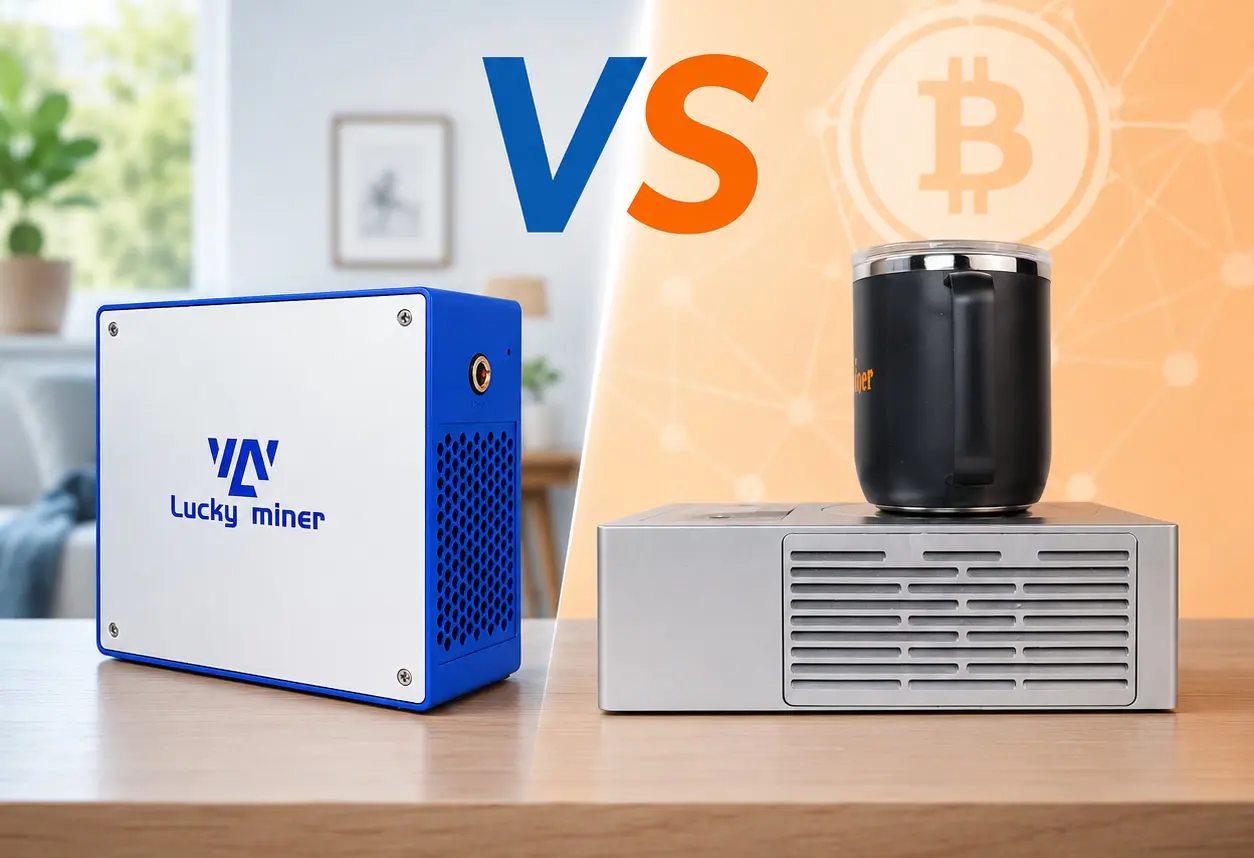
A home miner is simply a Bitcoin mining machine designed to operate in a residential environment.
Unlike industrial ASIC miners, a home miner usually offers:
- Lower power consumption
- Reduced noise levels
- Smaller physical size
- Easy plug-and-play setup
- Standard household power compatibility
Home miners are popular among hobbyists, educators, and Bitcoin enthusiasts who want to support the network while learning about mining.
What Is a Solo Miner?
A solo miner refers to the mining method rather than the hardware.
Instead of joining a mining pool, a solo miner connects directly to the Bitcoin network and attempts to discover a block independently.
If successful, the miner receives the full Bitcoin block reward instead of sharing it with other participants.
Because Bitcoin’s network difficulty is extremely high, solo mining is often viewed as a lottery-style experience for home users.
For more information about solo mining, visit:
https://en.wikipedia.org/wiki/Bitcoin_network
Home Mining vs Solo Mining
| Home Miner | Solo Miner |
|---|---|
| Refers to the hardware | Refers to the mining strategy |
| Can mine in a pool | Mines independently |
| Designed for quiet operation | Depends on network luck |
| Suitable for homes | Suitable for users seeking full block rewards |
Many home miners actually operate in mining pools to receive more consistent payouts.
Others enjoy solo mining because every hash contributes directly toward finding an entire Bitcoin block.
Should Beginners Choose Pool Mining or Solo Mining?
For most new users, mining pools provide predictable income because rewards are shared among participants.
Solo mining offers much lower odds of receiving rewards, but every successful block belongs entirely to the miner.
Many hobbyists keep a small solo miner running simply for the excitement of potentially discovering a Bitcoin block.
Popular solo mining pools include:
- CKPool
- Public Pool
These platforms allow individuals to participate in solo mining without operating a complete Bitcoin infrastructure.
Recommended Home Miners
If you’re looking for a compact Bitcoin miner, several products are suitable for beginners.
Popular choices include:
- Magicminer FM01
- Magicminer BG02
- Magicminer BG01
- Lucky Miner LV08
- Lucky Miner LV08 Pro
These miners are designed for home environments, making them ideal for learning Bitcoin mining without the noise and electricity requirements of industrial ASIC machines.
How to Choose the Right Home Miner
When selecting your first miner, consider:
Power Consumption
Lower power usage generally means lower operating costs.
Noise Level
If the miner will operate in a living room or office, quieter models are usually preferred.
Hashrate
Higher hashrate increases your chance of earning mining rewards, although profitability also depends on electricity prices and Bitcoin network difficulty.
Ease of Setup
Beginners should prioritize miners with web-based configuration and simple network setup.
Frequently Asked Questions
Can I mine Bitcoin at home?
Yes. Many compact ASIC miners are specifically designed for residential environments.
Is solo mining profitable?
Solo mining is based on probability. Most miners participate for the possibility of earning an entire block reward rather than consistent daily income.
Can a home miner join a mining pool?
Absolutely. Most home miners support both pool mining and solo mining.
Do I need technical experience?
Most modern home miners only require a power connection, an Ethernet or Wi-Fi connection, and a mining pool configuration.
Final Thoughts
A home miner and a solo miner are not competing products—they describe different parts of the Bitcoin mining experience.
Your hardware determines where and how comfortably you can mine, while your mining strategy determines how rewards are distributed.
Whether you’re experimenting with Bitcoin mining for the first time or building a small personal mining setup, choosing efficient hardware and understanding the differences between pool mining and solo mining will help you make better long-term decisions.
Related Products
- Magicminer FM01
- Magicminer BG01
- Magicminer BG02
- Lucky Miner LV08
- Lucky Miner LV08 Pro
Suggested Internal Links
- /product-category/home-miner/
- /product-category/solo-miner/
- /product/magicminer-fm01/
- /product/magicminer-bg02/
- /product/lucky-miner-lv08/
- /blog/how-to-start-bitcoin-mining-at-home/
- /blog/solo-mining-guide/