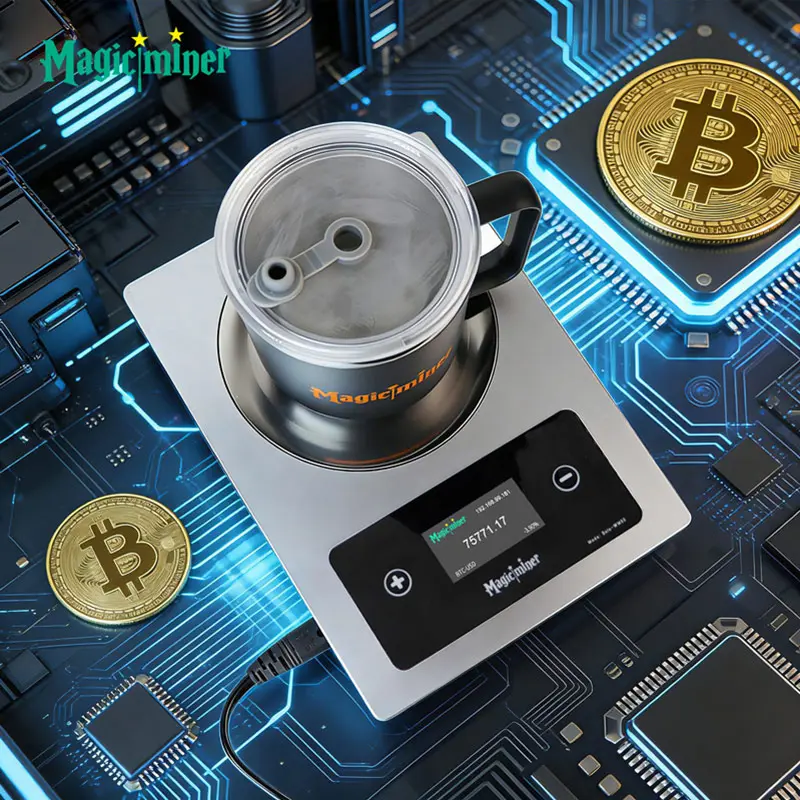

Many People Have Bought Lottery Tickets, But What Does a Home Miner Really Mean?
The first time people hear about Bitcoin mining, their reaction is often similar to how many felt when online payments first appeared years ago.
Confusion.
Curiosity.
And sometimes, a natural sense of caution.
That’s perfectly normal. Every new technology feels unfamiliar at the beginning, especially when terms like blockchain, hash rate, proof of work, mining pools, ASIC miners, and network difficulty start appearing all at once.
Many people watch a few videos, read several articles, and come away with the same feeling: “I think I understand a little… but it still seems far away from my everyday life.” So most people simply choose to wait and observe.
Interestingly, lottery tickets are different. Almost everyone understands them. People know the odds of hitting the jackpot are incredibly small, yet millions still buy tickets from time to time. Nobody refuses to dream simply because the probability is low.
And that raises an interesting question: From the perspective of probability and understanding, which is easier? Winning the lottery, or setting up a Home miner? Perhaps an even more curious question is this: Why are people willing to wait for luck, but often hesitant to explore the unknown?
When Luck Becomes Familiar, People Rarely Think About Probability
Some Expectations Are Simply Part of Life
Most people know that winning a lottery jackpot is extremely unlikely. Yet surprisingly few actually calculate the odds, because buying a ticket is rarely just about winning. It’s about hope, possibilities, and allowing a little optimism into everyday life. Sometimes, the anticipation itself is more enjoyable than the result.
Probability Exists Everywhere Around Us
Probability isn’t something exclusive to casinos or lotteries. Weather forecasts rely on probability. Scientific discoveries often involve probability. Building a business involves probability. Even many of humanity’s greatest breakthroughs emerged after countless attempts and experiments.
Interestingly, Bitcoin works in a similar way. Every block added to the network is the result of a mathematical probability process. You can see real-time data on how blocks are discovered over at Bitcoin network statistics. But there is one important difference. Lottery outcomes depend entirely on luck. Bitcoin’s network, on the other hand, is supported by real machines and millions of participants across the world. And that’s where things begin to look very different.
Luck May Fade, But Knowledge Remains
Some rewards come from chance. Others come from time. A winning ticket may eventually become nothing more than a memory. But knowledge stays. Experience stays. And understanding how the world works tends to stay as well.
A Solo Miner Is Participating in an Ongoing Probability Experiment
Many People Misunderstand What a Solo Miner Actually Does
For many newcomers, the idea of a Solo miner sounds mysterious. Something reserved for industrial facilities or large companies. But in reality, the concept is surprisingly simple. A Solo miner attempts to find blocks independently instead of joining a mining pool. If luck arrives, the entire reward belongs to that miner. In some ways, it resembles buying a lottery ticket. But only in some ways.
A Lottery Ticket Ends With Waiting; A Miner Keeps Working
Once a ticket is purchased, all that’s left is waiting. The process is over. A Bitcoin miner is different. It continues working, continues calculating, and continues participating in the network. For many long-term participants, the journey itself is often more interesting than the outcome.
Some People Enjoy the Process More Than the Result
Sometimes luck arrives quickly. Sometimes it takes much longer. But the machine keeps running, and the network keeps moving forward. That’s why many experienced miners don’t view Solo mining as gambling. Instead, they see it as a long-term probability experiment. And sometimes, experiments themselves are more fascinating than the answers they produce.
Home Miners Have Given Ordinary People a Window Into Bitcoin
Abstract Ideas Become Real
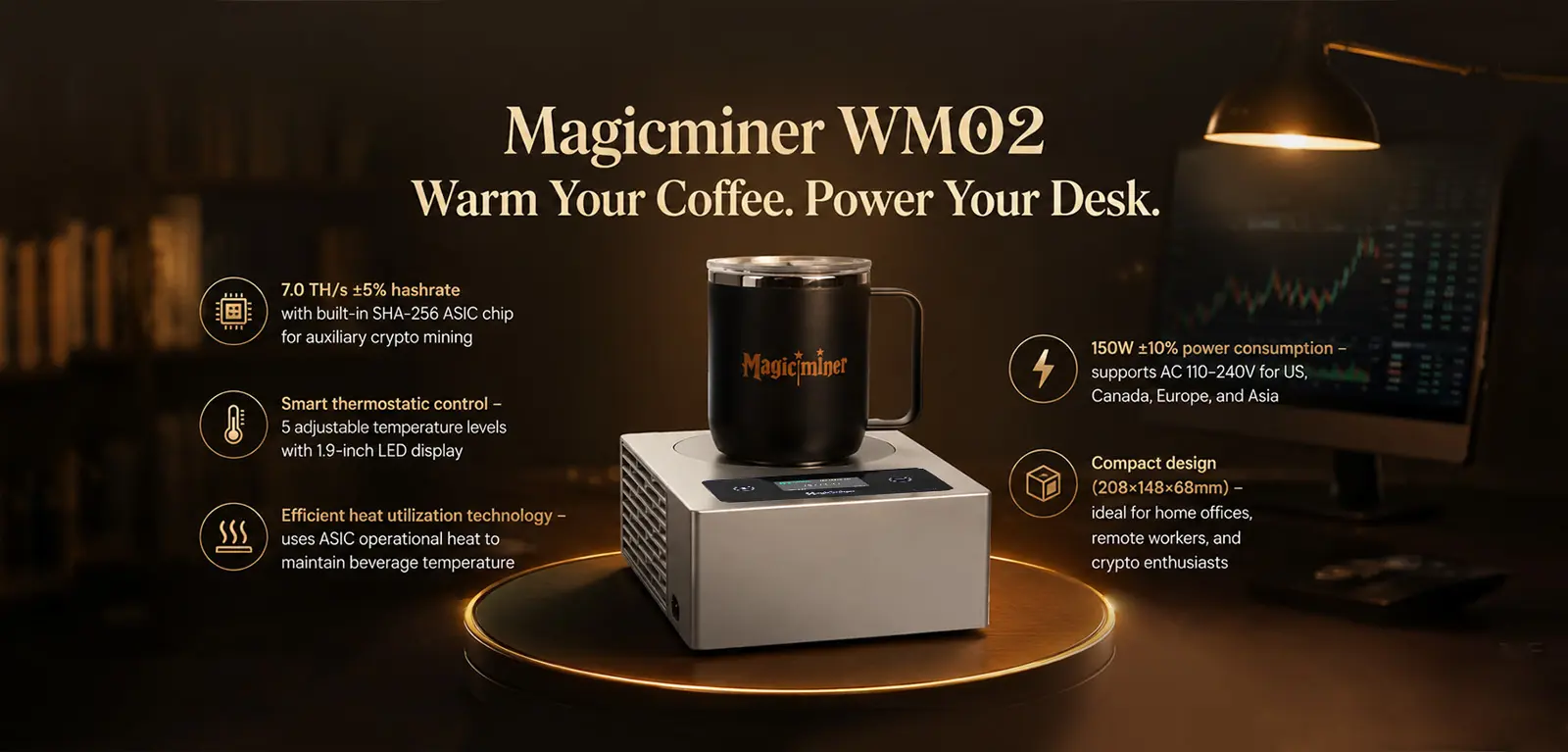
Years ago, Bitcoin mining was associated with massive industrial farms. Something that seemed far removed from everyday life. But in recent years, smaller Home miners have changed that image. For many people, a home miner feels less like a financial tool and more like a small server quietly participating in a global network. Some are motivated by curiosity. Some want to understand how Bitcoin mining works. Others simply want to see the process with their own eyes. If you are curious to see what devices are available, you can browse home mining machines designed for everyday users.
Many People Understand Bitcoin Only After Seeing It
Interestingly, many people don’t truly understand Bitcoin through white papers, technical articles, or complicated diagrams. Understanding often comes when they watch a machine running for the first time. Suddenly, abstract concepts become tangible. Blocks are no longer just words. Hash rates become more than numbers. And the network itself begins to feel real.
Sometimes seeing something in motion matters more than fully understanding every detail. Because learning is a gradual process. Nobody needs to become an expert on day one. But opening a new window into the world is often enough.
What Fascinates People Is Not Income, But the System Behind It
Bitcoin Is Much More Than a Machine
The deeper people explore, the more they realize that mining hardware is only one piece of a much larger ecosystem. Wallets store assets. Nodes verify transactions. Developers improve protocols. Miners provide computing power. Together, they form a network that has operated continuously for more than a decade. People from different countries contribute in different ways. Some write code, run nodes, study energy efficiency. And some simply become Home miners.
It Is Really a Global Experiment
Bitcoin isn’t just a product. And it isn’t simply an investment story. It is, in many ways, a global experiment. People from different cultures, languages, and backgrounds collaborate through the internet to maintain a shared system. That cooperation itself may be more interesting than the numbers on a price chart. Many important innovations throughout history have emerged through this kind of collaboration. The internet. Open-source software. Artificial intelligence. And perhaps Bitcoin as well.
Some Interesting Stories Are Hidden Inside Energy
Progress Has Always Been About Efficiency
When people hear about mining, they often think about energy consumption. But more people are beginning to ask a different question: How can energy be used more efficiently? Because throughout history, civilization itself has advanced through better use of energy. Steam engines. Electricity. The internet. Each era improved efficiency in its own way. And today, people continue searching for new possibilities.
Heat and Wasted Energy Can Have New Purposes
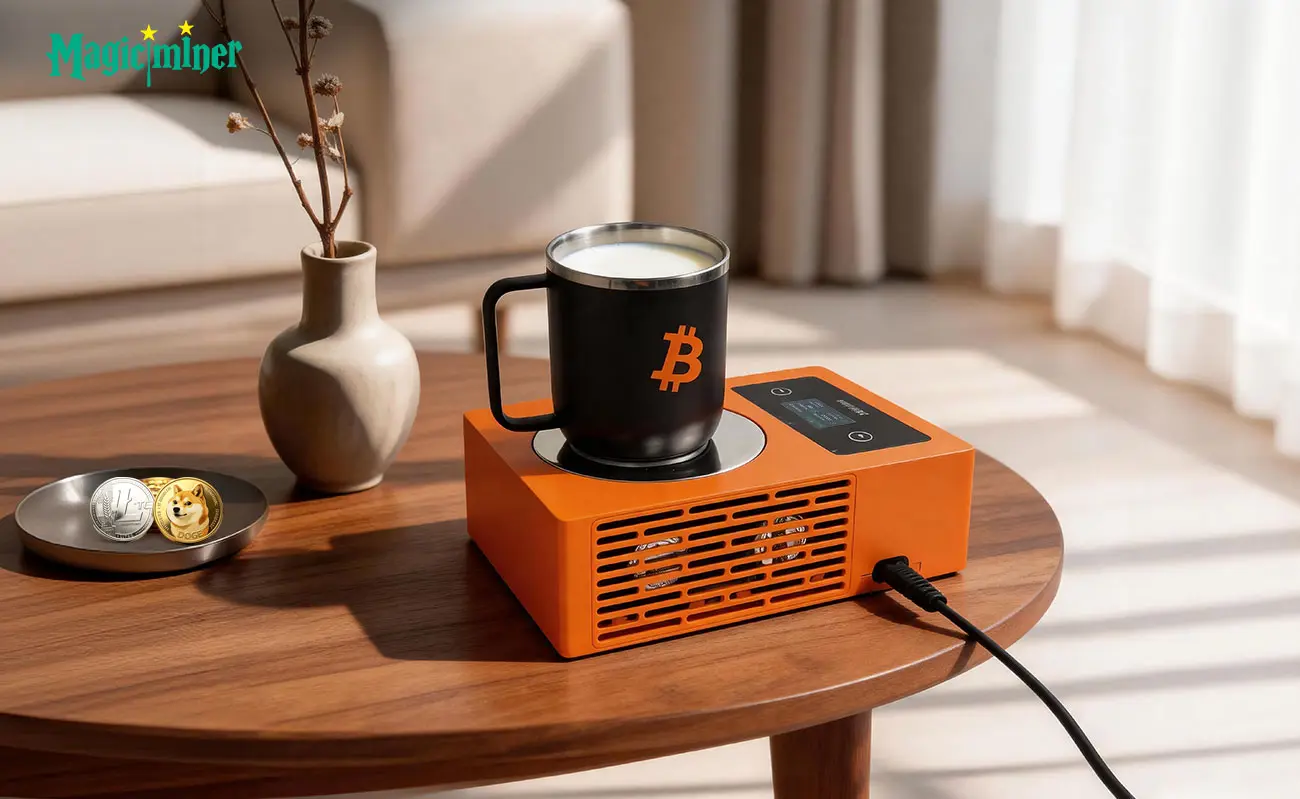
Around the world, interesting ideas are emerging. Some people use mining heat to warm their homes. Others pair miners with solar energy systems. Some experiments focus on recovering wasted energy. Researchers are exploring ways to recycle heat and improve efficiency. These stories rarely make headlines. Yet they are quietly happening every day.
No Technology Is Perfect
There are no perfect technologies. Only technologies that continue to evolve. And progress itself has always been a process of continuous improvement.
The Biggest Misunderstanding Is Treating Mining as a Shortcut to Wealth
Wealth Stories Come and Go
Over the years, Bitcoin has created countless legends. And countless misunderstandings. Some see it as a guaranteed path to riches. Others dismiss it entirely. Perhaps both views miss the bigger picture. Because things that endure are rarely built upon myths. Markets change. Technology changes. Cycles change. No machine guarantees wealth. And no technology creates miracles.
Long-Term Thinking Matters More
For many participants, mining represents patience. A chance to observe technological progress. A way to learn. A way to stay curious. In a rapidly changing world, curiosity and continuous learning may ultimately matter more than immediate answers.
Stay Curious in a Changing World
Even today, many people remain skeptical about Bitcoin. And that skepticism is understandable. Every new idea needs time.
When steam engines first appeared, few understood how they would transform civilization. When the internet emerged, very few imagined today’s connected world. Before artificial intelligence, many concepts sounded equally distant. History has a habit of repeating itself.
Every era introduces something unfamiliar. At first, those things often seem complicated and uncertain. Most people choose to watch from a distance. And there is nothing wrong with that.
Nobody is required to become an expert. Nobody has to embrace every change immediately. But perhaps it’s worth leaving a little room for curiosity. To observe, to learn. To remain connected with the world as it evolves.
After all, before a lottery drawing, all people can do is wait for luck. But in a changing world, people can also choose to understand. To explore. To think. And to remain open to new ideas.
Luck eventually fades. Trends eventually disappear. But knowledge, curiosity, and the ability to keep learning often stay with us far longer.
Seeds of Tomorrow Are Planted in Quiet Observation
Perhaps understanding everything isn’t necessary. Perhaps understanding a little more than yesterday is enough. Because what keeps people connected to their time isn’t how many opportunities they capture. It’s whether they choose to stand outside forever.
Nobody knows what the next decade will bring. Twenty years ago, few imagined that the internet would connect nearly everyone. Ten years ago, few imagined how quickly artificial intelligence would enter everyday life. And some of today’s unfamiliar technologies may still be planting seeds for tomorrow.
Home miners. Solo miners. Bitcoin networks. Artificial intelligence. Distributed computing. Energy innovation. These seemingly separate worlds may one day intersect. And perhaps they will give rise to entirely new industries, new technologies, and ideas that are still difficult to imagine today.
Most changes begin quietly. Like seeds beneath the soil. Nobody knows exactly what they will become. But for those who remain curious, perhaps the answer itself is not the most important thing. What matters is being able to see the future as it slowly arrives. To understand it. And not to spend an entire lifetime standing outside the door.
Because luck may come and go. But knowledge remains. And perhaps the future itself grows from that endless curiosity and willingness to explore.